
The Cost of a Printer is not the Printer
A cost comparison of three Brother color laser printers

I own a Brother HL3170CDW and have been quite satisfied. Reliable, good quality print, fairly economical; everything I wanted in a printer. This week, an interior, non-replaceable roller began to disintegrate and I realized that a new printer was in my future.

As I enjoyed my existing printer, I searched Amazon and found it again. My mouse was hovering over the ‘Buy now’ button and a thought struck me:
I wonder if Brother has a new, improved model??
This question led me into the murky economics of printer purchasing.¹
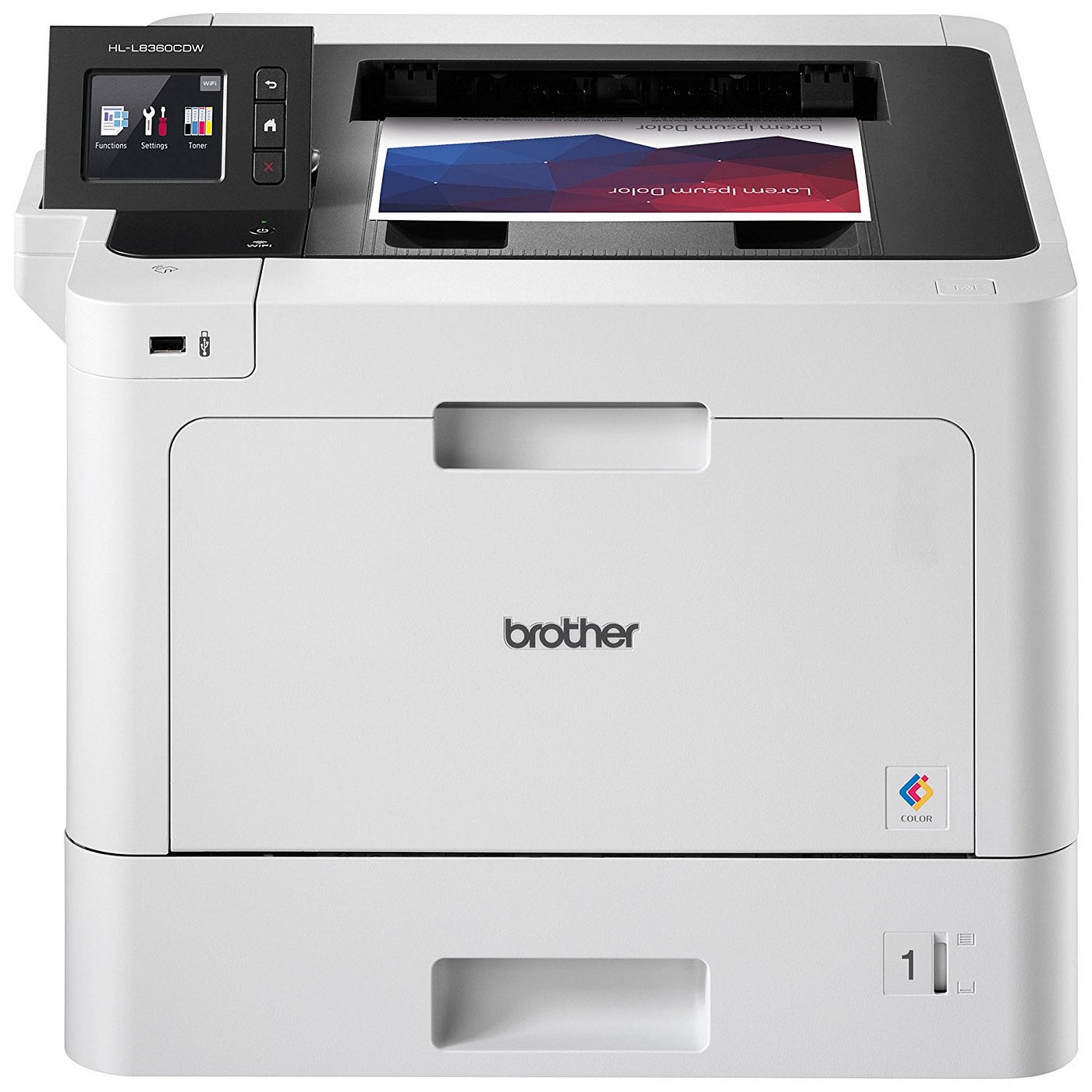
Looking for a new model, Amazon’s magical algorithms suggested the Brother HLL8260CDW and as I looked it over, I was intrigued—50% higher print speed and an improved toner yield, but a larger unit in size and weight. Visiting the Brother website, I found that it had a cousin worth also considering, the HLL8360CDW, which they said used“super-high yield” toner cartridges.
So I took the costs from Amazon, the expected yield from Brother², and my actual page counts from my existing printer. That data was input into Excel and gave me the following info:
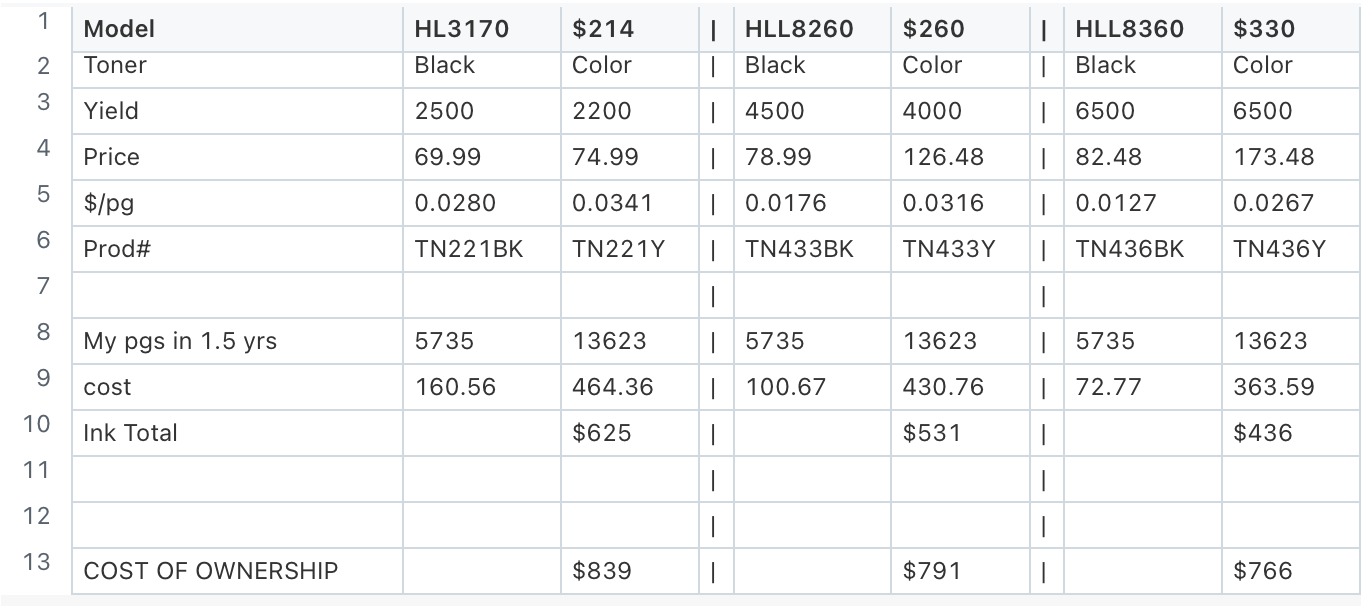
Lo and behold, the cheapest printer to buy would be the most expensive printer to own!
Paying $116 now for a faster, more full-featured printer will save me about $75 over the next 18 months.
The price of printers has dropped so low that you can almost guarantee that the cheaper the printer is, the more expensive its ink/toner will be. There is not much margin left on Home/Small Business printers. The money comes from the supplies.
The HLL8360 and HLL8260 both print about 50% faster than the HL3170. Both have larger paper trays. Both offer secure printing features that the HL3170 doesn’t have. And the HLL8360 adds NFC printing and authorization.
More features, yet a lower overall cost!
Don’t get fooled when shopping for a printer. What’s true with Brother is true for EVERY printer, laser or inkjet.
Buying a printer is a spreadsheet decision. Do the math before you buy!
If you want to check out the three I studied, here are the links to Amazon.³
Brother HL3170CDW — Brother HLL8260CDW — Brother HLL8360CDW
To explain the table briefly:
- (Model) Line 1 lists the Brother printer model (HL3170CDW, HLL8260CDW, HLL8360CDW) and the price on Amazon, as of Feb 6, 2018.
- (Toner) Line 2 is a header row that describes the toner colors being described below.
- (Yield) Line 3 is Brother’s stated “toner yield”, which is how pages a toner should last for before being replaced.
- (Price) Line 4 is Amazon’s price for the toner, as of Feb 6, 2018.
- ($/pg) Line 5 is the cost per page, of the toner, at the above price.
- (Prod#) Line 6 is the product number for the toner, to make sure I kept them straight.
- (My pgs in 1.5 yrs) Line 8 is the number of pages that my printer declares I have printed in the last 18 months. The number listed for color is the sum of my cyan, magenta and yellow page counts.
- (Cost) Line 9 tells me the cost I have spent on each toner, with the wrong assumption that I’ve paid today’s Amazon toner price for all my printing.
- (Ink Total) Line 10 adds the black and color toner costs together into one sum.
- (Cost of Ownership) Line 13 adds the purchase price and the ink total together, tax and shipping not included.
¹ To be clear, I am not an economist nor a salesman shilling for someone. I’m just a pastor at a church who really, really dislikes wasting money.
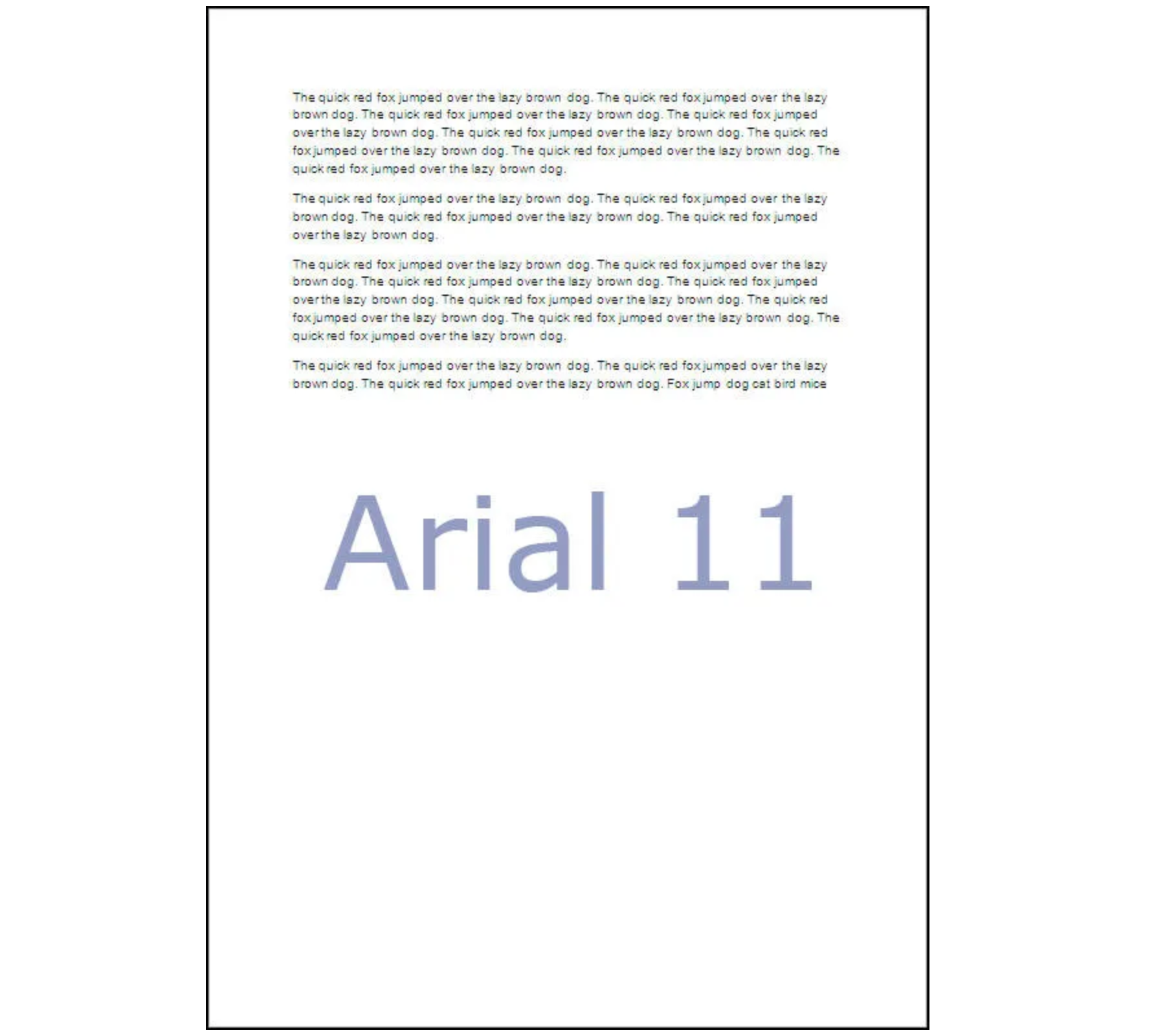
² A manufacturer stated printer yield assumes 5% page coverage by the toner. That is CRAZY! That’s about half a page of text. If, like most people, you print more that that, you will need toners more often than the stated yield. Here is a pic of what 5% looks like:
³ These are Amazon affiliate links. Legalese now follows: I am a participant in the Amazon Services LLC Associates Program, an affiliate advertising program designed to provide a means to earn fees by linking to Amazon.com.
I did NOT write this for sales purposes, and am happy if you choose to buy an HP or Okidata from Walmart instead. For that matter, you could handcopy everything with a fountain pen or make duplicates with a mimeograph. This article is about the incredible economics of printers and ink/toner.